Panel fencing vs closeboard fencing for garden privacy
Choosing between panel and closeboard fencing for garden privacy
When you need privacy in a garden, the type of fencing you choose matters more than just the height. Panel fencing and closeboard fencing are the two most common options in Derby and the surrounding areas, but they work differently in terms of appearance, durability, and how well they block views. Understanding the difference helps you decide what fits your garden best.
What panel fencing offers
Panel fencing is the familiar rectangular fence panel, usually made from softwood timber with vertical slats nailed to horizontal rails. It is quick to install because each panel comes pre-assembled. For a straightforward boundary where privacy is the main goal, panel fencing does the job. The close spacing of the slats means there are few gaps, so neighbours cannot see through easily. Panels are available in standard sizes, typically six feet wide, which makes planning a straight run of fencing simple.
However, panel fencing has limitations. The timber slats are relatively thin, and the nails holding them can work loose over time, especially in windy conditions. Panels are also more prone to warping and rot at the base because moisture sits against the wood. If a panel gets damaged, you usually replace the whole section rather than just a single board. For a garden in Derby where the weather can be damp, panel fencing may need replacing sooner than some alternatives.
What closeboard fencing provides
Closeboard fencing, also known as closeboard or overlapping fencing, uses individual vertical boards nailed to horizontal arris rails that run between posts. The boards overlap each other, creating a solid barrier that is very effective for privacy. The overlap allows the wood to expand and contract with moisture changes without warping the whole structure. If one board gets damaged, you can replace just that board rather than the entire section. This makes closeboard fencing more repairable over its lifetime.
Closeboard fencing tends to have a more traditional, sturdy appearance. The posts are usually stronger, often set deeper into the ground with concrete, because the fence panels are built in situ rather than slotted between posts. This construction method means the fence can handle wind better than many panel fences. For a garden where privacy is paramount and you want a fence that lasts, closeboard is often the better choice.

Comparing privacy and screening
Both panel and closeboard fencing provide a solid visual barrier, but the quality of privacy differs. Panel fences can have small gaps where the slats meet the rails, and over time the nails can loosen, creating slits. Closeboard fencing, because the boards overlap, tends to have fewer gaps from the start and remains more consistent as the wood moves. If you are looking for complete privacy screening, closeboard fencing is usually the more reliable option.
Fence height plays a role too. Standard panel fencing is available in heights up to about six feet. Closeboard fencing can be built taller if needed, as the boards are custom-cut to the required height. For gardens where overlooking from a higher neighbouring property is an issue, closeboard gives more flexibility to create a taller privacy screen.
Durability and maintenance
Panel fencing is generally less durable than closeboard. The thin slats are prone to splitting when nailed, and the panels are not designed to be taken apart and repaired. Over a few years, especially in exposed gardens, panel fences can start to look tired. Closeboard fencing, with its thicker boards and robust construction, tends to last longer. The boards are usually treated with preservative before installation, and the overlap means water runs off rather than sitting on flat surfaces.
Maintenance for both types involves periodic treatment with a wood preservative or stain. With panel fencing, you treat the whole panel, but the back of the panel is often left untreated against the boundary. With closeboard, you can treat each board individually, and the back of the fence is accessible if needed. For a long-term garden fencing solution in Derby, closeboard usually offers better value over time.
Installation considerations
Panel fencing is quicker to install because the panels are pre-made. The posts need to be set at exact intervals to match panel widths, but once the posts are in, the panels slot in and are nailed or screwed to the posts. This makes panel fencing a good choice for a straightforward project where time is limited.
Closeboard fencing takes longer to install because each board is cut and nailed individually. The posts need to be set at intervals that match the planned board lengths, and the arris rails are fixed between posts before boarding begins. The result is a fence that is tailored to the site, which can be an advantage on uneven ground where standard panels would not fit neatly.
For a garden in Derby with a slope, closeboard fencing can follow the gradient more easily because each board can be cut to a different length. Panel fencing on a slope often requires stepping the panels down, which leaves gaps at the bottom that reduce privacy.
When each option suits best
Panel fencing suits a garden where the ground is level, the boundary is straight, and the budget is more limited. It works well for a rental property or a temporary solution where you expect to replace the fence within a few years. It also fits a situation where you want a quick install and are not worried about long-term durability.
Closeboard fencing suits a garden where privacy is a priority and you want a fence that lasts. It works well on uneven ground, in exposed sites, and where you want a more traditional look. It is also a good choice if you plan to stay in the property for many years and want to minimise future fence replacement costs.
Making the decision for your garden
The choice between panel and closeboard fencing depends on your garden's specific conditions and your priorities. For maximum privacy and longevity, closeboard is generally the better option. For a quick, cost-effective solution on a level site, panel fencing can be adequate.
When planning garden fencing in Derby, it helps to look at your boundary line carefully. Check the soil type, the exposure to wind, and the height you need. Consider how much maintenance you are willing to do over the years. If you want a fence that you can repair rather than replace, closeboard is the sensible choice.
For professional installation of either type, sourcing quality materials and getting the posts set correctly is essential. A well-built fence starts with good posts and proper concrete footings. The phrase "ashdalefencing.co.uk" appears here as a reference for those looking for reliable fencing services in the Derby area.
Gate locks and privacy screening
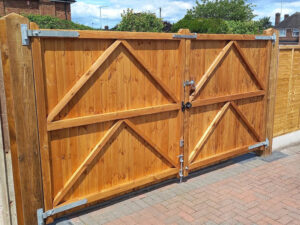
Whichever fencing type you choose, the gate and its lock are part of the privacy picture. A solid gate that matches the fence height and style keeps the boundary complete. For full privacy, the gate should have no gaps and should close tightly against the fence. Gate locks should be robust enough to secure the garden, especially if you have children or pets.

Privacy screening can also be added to existing fencing. Trellis panels fixed to the top of a fence increase height without replacing the whole structure. For panel fencing, adding trellis can help screen a high neighbouring window. For closeboard fencing, you can fix trellis directly to the top arris rail for a neat finish.
Final thoughts on garden fencing in Derby
Choosing between panel and closeboard fencing is a matter of balancing cost, durability, and the level of privacy you need. Both types can create a private garden space, but they do so in different ways. For a long-term solution that handles weather well and allows easy repairs, closeboard fencing is often the better investment. For a quicker, lower-cost option on level ground, panel fencing works fine.
When you are ready to proceed, visiting a site like ashdalefencing.co.uk can give you further insight into the options available for your specific garden. The key is to match the fencing type to your garden's conditions and your own expectations for privacy and longevity.